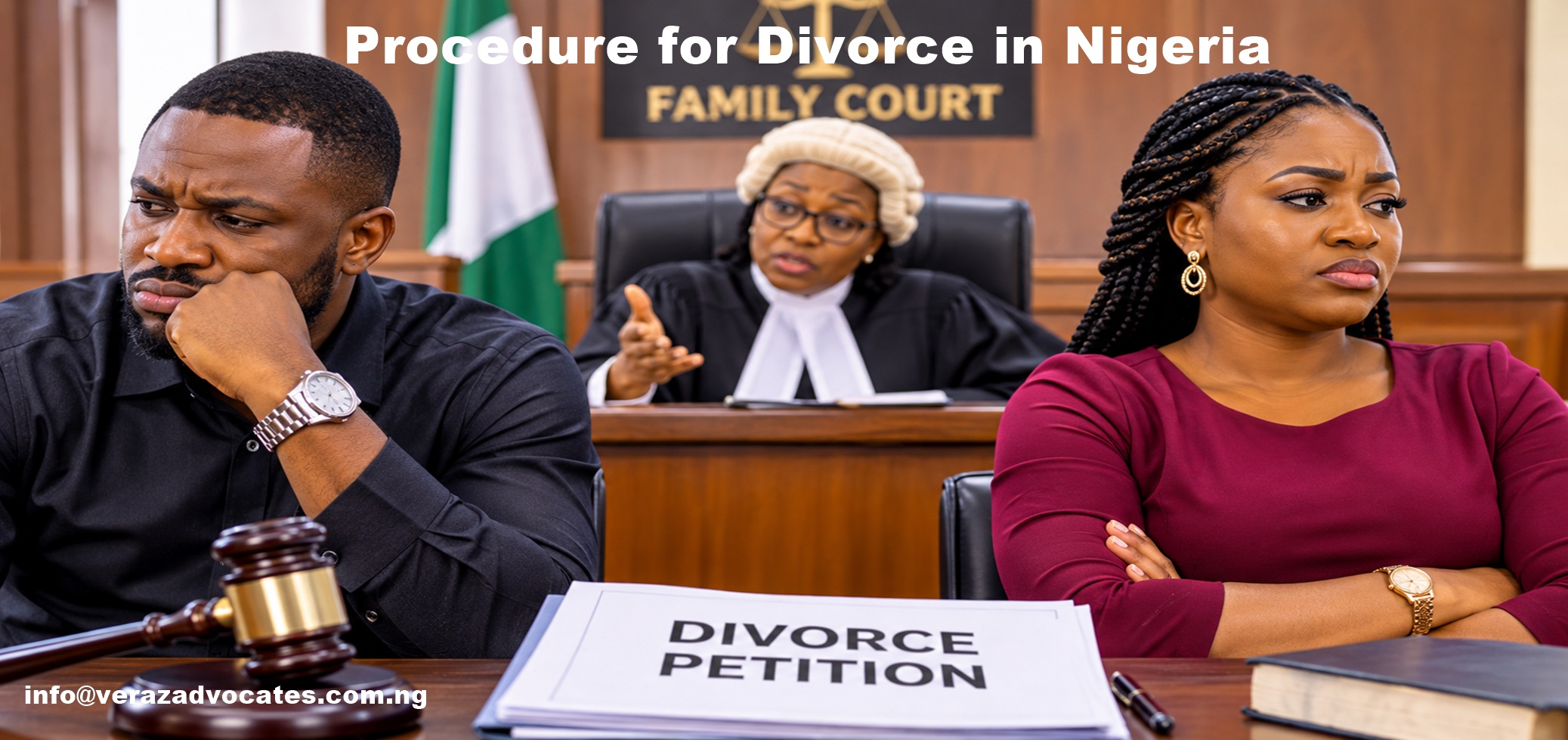
Marriage is supposed to be a union of love, commitment, understanding and companionship. However, sometimes things do not go as planned. What started with happiness may eventually become a relationship filled with constant disagreements, emotional pain, separation or even abuse.
One question many married people ask is “Can I divorce my husband or wife if he or she refuses to agree to the divorce?”
The simple answer is YES. Under Nigerian law, you can apply for a divorce even if your spouse does not want the marriage to end. Your husband or wife cannot force you to remain married simply by refusing to sign divorce papers.
However, there are legal procedures you must follow before a court can dissolve your marriage.
Let’s explain what the law says in simple language.
WHAT NIGERIAN LAW SAY ABOUT DIVORCE
In Nigeria, divorce for a statutory marriage is governed by the Matrimonial Causes Act.
Under Section 15(1) of the Act, either the husband or the wife can approach the court and ask for the marriage to be dissolved.
This means that:
- A wife can file for divorce even if her husband disagrees.
- A husband can file for divorce even if his wife refuses.
- Both parties do not have to agree before a divorce petition can be filed.
- The court, not the refusing spouse, has the authority to decide whether the marriage should be dissolved.
However, filing for divorce does not automatically mean the court will grant it. The person asking for the divorce must establish a legally recognized ground.
THE LEGAL GROUNDS FOR DIVORCE IN NIGERIA
The law recognizes one main ground for divorce: that the marriage has broken down irretrievably. In simple English, this means the marriage has broken down so badly that it cannot reasonably be repaired.
Under Section 15(2) of the Matrimonial Causes Act, a person must prove at least one of the following facts:
- Refusal to consummate the marriage: Where one spouse deliberately and persistently refuses to have sexual relations necessary to consummate the marriage.
- Adultery: Where one spouse commits adultery and the other spouse finds it intolerable to continue living with them.
- Unreasonable behaviour: Where a spouse behaves in such a way that the other cannot reasonably be expected to continue living with them. This may include serious cruelty, violence or other unacceptable conduct.
- Desertion: Where one spouse abandons the other for at least one continuous year immediately before the divorce petition.
- Living apart for two years: Where the couple have lived apart continuously for at least two years and the other spouse does not object to the divorce.
- Living apart for three years: Where the couple have lived apart continuously for at least three years, even if the other spouse objects.
- Failure to obey a court order: Where a spouse has failed for at least one year to comply with a court order for restitution of conjugal rights.
- Presumption of death: Where one spouse has been absent in circumstances that provide reasonable grounds to presume that the person is dead.
You do not need to prove all eight facts. Establishing at least one applicable fact to the satisfaction of the court may be sufficient.
WHAT IF YOUR SPOUSE REFUSES TO SIGN THE DIVORCE PAPERS?
This is where many people become confused. Imagine a woman who has suffered years of domestic violence. She decides that she no longer wants to remain in the marriage. However, her husband tells her: “You cannot divorce me because I will never agree.”
Can he stop her?
No.
The law does not give one spouse the power to imprison the other person in a marriage simply because they refuse to agree to a divorce. The person who wants the divorce can present a petition before the appropriate court. The other spouse will be given the opportunity to respond and defend the case.
The court will consider the evidence presented by both parties and make its decision according to the law.
Therefore, refusing to sign divorce papers does not automatically stop divorce proceedings rather it hastens the whole process.
Read:What Courts Consider in Child Custody in Nigeria
WHAT HAPPENS IF YOUR SPOUSE REFUSES TO COME TO COURT?
The answer is that the divorce proceedings may still continue, provided the required legal procedures, including proper service of court processes, have been followed.
Your spouse cannot automatically stop the proceedings by refusing to attend court. However, this does not mean that you will automatically win simply because your spouse is absent.
You must still present sufficient evidence to establish your case. The court must be satisfied that the legal requirements have been met.
CAN I DIVORCE MY SPOUSE AFTER JUST ONE YEAR OF MARRIAGE?
This is another important issue. Under Section 30 of the Matrimonial Causes Act, divorce proceedings generally cannot be instituted within the first two years of marriage without the consent of the court.
However, for every general rule, there is an exception. The law provides certain exceptions, including some cases involving refusal to consummate the marriage, adultery and exceptional circumstances.
Where consent or permission is required, the court considers whether refusing its consent or permission would cause exceptional hardship or whether the case involves exceptional depravity.
Note: if you have been married for less than two years and are considering divorce, seek legal advice before commencing proceedings.
DOES THIS LAW APPLY TO EVERY TYPE OF MARRIAGE IN NIGERIA?
It is important to understand that not every marriage in Nigeria is dissolved in exactly the same way.
The Matrimonial Causes Act primarily governs statutory marriages. Customary and Islamic marriages have different rules and procedures for dissolution.
Therefore, before taking any legal step, you must first establish the type of marriage you contracted because the correct procedure depends on it.
In conclusion, the fact that your husband or wife refuses to agree to a divorce does not mean you have lost your legal right to seek one. Nigerian law recognizes that either spouse can approach the court to seek dissolution of a statutory marriage where the legal requirements are satisfied.
However, divorce must be handled properly. You need to understand your rights, follow the correct legal procedure and protect your interests, particularly where children, maintenance and property are involved.
Remember: Marriage is a legal union, and ending it requires the appropriate legal process.
If you are considering divorce, do not rely on assumptions, threats or advice from friends. Speak with a lawyer who can guide you according to the law.
For further enquiry
Email: info@verazadvocates.com.ng
Call / WhatsApp: +234 8116486356
